Hull & Machinery insurance: the complete guide for vessel operators
What Hull & Machinery Insurance Covers
Hull & Machinery (H&M) insurance is one of the two primary classes of marine insurance, alongside Protection & Indemnity (P&I). H&M covers physical damage to the vessel itself — the hull structure, machinery, equipment, and fittings.
Standard H&M coverage includes:
- **Collision damage** — physical damage from contact with other vessels, fixed objects, or submerged hazards
- **Grounding** — damage from running aground or striking the seabed
- **Fire and explosion** — damage from onboard fires or machinery explosions
- **Weather damage** — storm, heavy seas, and adverse weather conditions
- **Machinery breakdown** — main engine, auxiliary engines, and onboard systems
- **Sinking** — total loss from flooding or structural failure
H&M insurance does NOT cover third-party liabilities (that is P&I), cargo damage, or losses from war, piracy, or nuclear events without specific endorsements.
How H&M Premiums Are Calculated
H&M premiums are calculated as a percentage of the vessel's insured value. The rate depends on multiple factors:
Vessel condition. This is the single largest factor. A vessel in excellent condition with no structural issues commands significantly lower premiums than one with deferred maintenance, corrosion, or machinery wear.
Vessel age and type. Older vessels generally attract higher premiums due to increased mechanical risk and structural fatigue. Vessel type matters too — tankers, bulk carriers, and container ships each have different risk profiles.
Trading area. Some regions carry higher risk due to weather patterns, piracy, congestion, or navigational hazards. Vessels operating in designated war zones require additional coverage.
Claims history. A vessel or operator with a history of claims faces higher premiums. Conversely, a clean claims record over multiple years earns discounts.
Classification status. Vessels classed with recognized classification societies (Lloyd's Register, DNV, Bureau Veritas, ABS) typically receive more favorable terms than unclassed or lapsed-class vessels.
The Agreed Value Problem
Most H&M policies are written on an 'agreed value' basis — the insurer and insured agree on the vessel's value at the start of the policy. If the vessel is a total loss, the agreed value is what gets paid.
The problem: agreed values often diverge from actual market values. If a vessel is insured for $5 million but is only worth $3 million at the time of loss, the insurer overpays. If insured for $3 million but worth $5 million, the owner is underinsured.
Accurate, condition-based vessel valuation solves this problem. When the agreed value is derived from structured condition data, market comparables, and depreciation modeling, it reflects the vessel's actual worth — protecting both insurer and insured.
How AI Is Changing H&M Underwriting
Traditional H&M underwriting relies on survey reports, broker submissions, and underwriter judgment. The process works, but it has limitations:
Data staleness. By the time a survey report reaches an underwriter, the vessel's condition may have changed. The report reflects a point in time, not current reality.
Inconsistency. Different surveyors document the same vessel differently. Underwriters must interpret narrative reports and make subjective judgments about condition severity.
Speed. The submission-to-quote cycle takes weeks. Brokers assemble packages manually. Underwriters review them manually. Quotes are generated manually.
AI-powered marine insurance infrastructure addresses all three limitations:
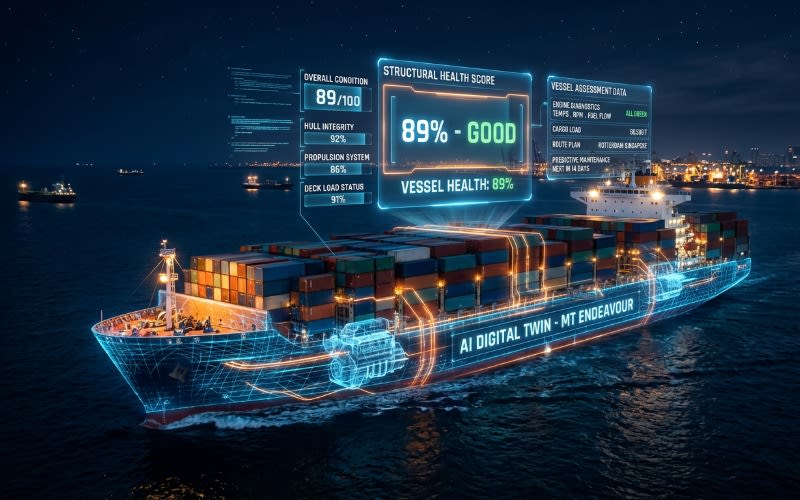
Current data. Computer vision processes vessel imagery and generates structured condition findings in minutes, not weeks. The data is current when the underwriting decision is made.
Consistency. Automated condition scoring applies the same criteria to every vessel. Findings are classified by type, severity, and extent using standardized frameworks.
Speed. When condition data flows directly into scoring, valuation, and pricing engines, the submission-to-quote cycle compresses from weeks to minutes.
Choosing H&M Coverage
When selecting H&M coverage, vessel operators should consider:
Insured value accuracy. Ensure the agreed value reflects actual vessel condition and market value. Overinsurance wastes premium. Underinsurance creates unprotected exposure.
Deductible structure. Higher deductibles reduce premiums but increase out-of-pocket costs for smaller claims. Match the deductible to your risk tolerance and cash flow.
Coverage extensions. Standard H&M may not cover everything. Consider endorsements for machinery breakdown, loss of hire, crew negligence, and port risks based on your operating profile.
Classification maintenance. Keep classification status current. Lapsed class status can void coverage or trigger premium surcharges.
The marine insurance market is evolving. Operators who maintain structured, verifiable condition data on their vessels will increasingly access better terms, faster placement, and more accurate pricing. The data advantage is becoming a competitive advantage.