From ship photo to policy: the future of instant vessel insurance premiums
The 3-6 Week Problem
Binding a marine insurance policy today takes 3 to 6 weeks. The process involves broker submissions, survey scheduling, report generation, underwriter review, quote negotiation, and documentation. Each step introduces delay, manual effort, and data re-entry.
For a $34 billion global premium pool, this inefficiency is not a minor inconvenience. It is a structural cost that affects every participant in the value chain:
- **Vessel owners** wait weeks for coverage, sometimes operating without adequate insurance during the gap
- **Brokers** spend hours assembling submissions and chasing updates
- **Underwriters** review the same types of information repeatedly, with no standardized format
- **Insurers** carry pricing risk during the extended binding cycle as market conditions change
The fundamental issue is not that any single step is slow. It is that the entire chain is serial — each step waits for the previous one to complete — and the data format changes at every handoff.
What 'Instant' Actually Means
The phrase 'instant insurance' can mean different things. In personal lines, it often means pre-underwritten products with simplified applications. In marine insurance, the assets are too complex and the exposures too large for that approach.
What is achievable — and what the industry needs — is automated data flow from physical asset to pricing output. Not instant in the sense of zero processing time, but instant in the sense of eliminating the weeks of manual handoffs between inspection, scoring, valuation, and premium calculation.
The pipeline looks like this:
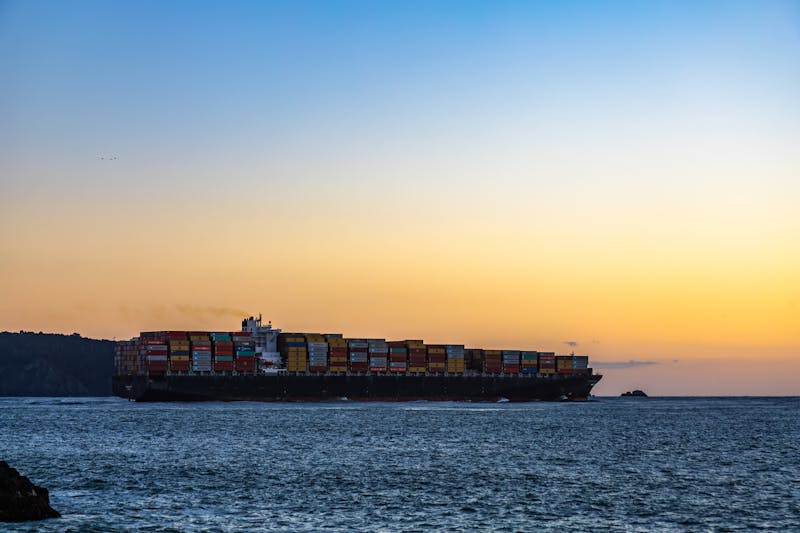
Photo → Inspection Data (minutes). Computer vision processes vessel imagery and generates structured condition findings. No scheduling. No site visit.
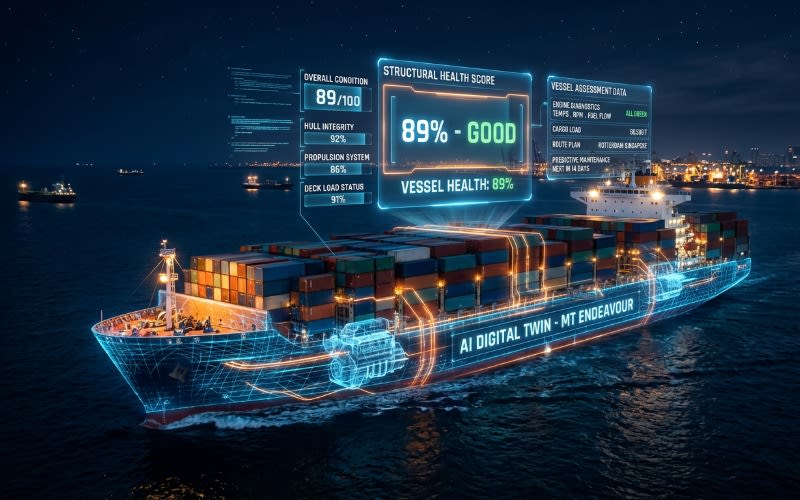
Inspection Data → Condition Score (seconds). Automated scoring engine evaluates findings against maritime standards. Consistent output regardless of input source.
Condition Score → Valuation (seconds). Market comparables, depreciation curves, and condition adjustment produce a defensible vessel value.
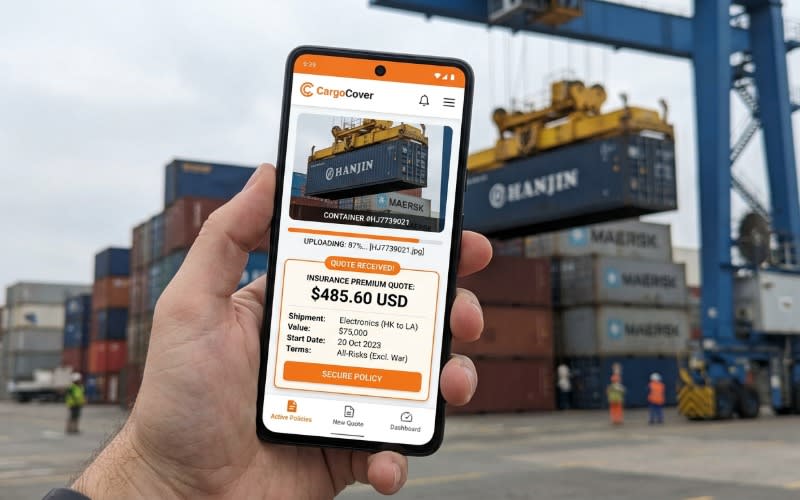
Valuation + Condition → Premium (seconds). Deterministic pricing engine generates H&M and P&I premiums with full audit trail.
Total elapsed time from photo upload to calculated premium: minutes, not weeks.
The Deterministic Difference
Speed without accuracy is worse than being slow. The critical distinction in automated marine pricing is between probabilistic and deterministic approaches.
A probabilistic approach uses machine learning to predict premiums based on historical patterns. It is fast, but it cannot explain its reasoning. When a reinsurer asks why a premium was set at a particular level, the answer is 'the model predicted it.'
A deterministic approach uses defined rules: every variable is named, every weight is documented, every calculation step is traceable. The same inputs always produce the same output. When a reinsurer asks why, the answer is a complete audit trail.
For regulated markets and sophisticated buyers, deterministic pricing is not optional. It is a requirement.
What Changes for the Market
The compression of the binding cycle from weeks to minutes changes the economics of marine insurance in several ways:
Portfolio velocity. Insurers can bind more policies with the same underwriting capacity. The bottleneck shifts from data processing to business development.
Pricing accuracy. When premiums are calculated from current, verified condition data instead of stale survey reports, loss ratios improve. Well-maintained vessels pay less. Poorly-maintained vessels pay more. The market prices risk more efficiently.
Broker differentiation. Brokers who can deliver structured, auditable vessel data will place business faster. Speed becomes a competitive advantage, not just a convenience.
Claims reduction. When every policy is bound with a timestamped condition baseline, claims disputes decrease. The before-and-after evidence trail already exists.
The Infrastructure Layer
None of this works without infrastructure. The marine insurance industry does not need another point solution for inspection or another AI model for pricing. It needs a connected system that moves data from physical asset to financial decision without manual intervention.
This infrastructure layer — connecting vessel imagery to condition scores to valuations to premiums to claims baselines — is what transforms marine underwriting from an artisanal process to an engineered one.
The technology is not theoretical. Every component described in this article exists today. The question is not whether the industry will adopt it, but which carriers, brokers, and MGAs will build the infrastructure first — and capture the competitive advantage that comes with it.