Why marine insurance is the last frontier of digital transformation
A $34 Billion Industry Running on PDFs
Marine insurance is one of the oldest commercial activities on earth. Lloyd's of London started in a coffee house in 1688. Three centuries later, the core workflow has barely changed: a broker assembles a submission package, a surveyor writes a narrative report, and an underwriter makes a decision based on experience and judgment.
The numbers are staggering. The global marine insurance market generates over $34 billion in annual premiums. Yet the average time from submission to bound policy is 3 to 6 weeks. Claims settlement takes months. Documentation is fragmented across PDFs, emails, and spreadsheets.
Every other insurance vertical has undergone digital transformation. Auto insurance uses telematics. Property insurance uses satellite imagery and IoT sensors. Health insurance runs on electronic medical records. Marine insurance still runs on paper.
Why Marine Lagged Behind
The resistance to digitization is not laziness or ignorance. Marine insurance has structural characteristics that make transformation genuinely harder:
Asset complexity. A cargo ship is not a car. It has thousands of structural components, operates in corrosive environments, and is subject to dozens of international regulatory frameworks. Standardizing the data capture for such a complex asset is a non-trivial engineering challenge.
Relationship-driven placement. Marine insurance has operated on relationships for centuries. Brokers know underwriters. Underwriters trust surveyors. Disrupting these relationships requires delivering obvious, measurable value — not just a better user interface.
Regulatory fragmentation. A vessel registered in Panama, insured in London, operating in the South China Sea, and classified by a Norwegian society is subject to four different regulatory frameworks simultaneously. Building technology that accounts for this fragmentation requires deep domain expertise.
Low frequency, high severity. Marine claims are infrequent but large. A single hull loss can exceed $100 million. The stakes make the industry conservative about adopting unproven approaches.
What Changed
Three developments have converged to make marine insurance digitization not just possible but inevitable:
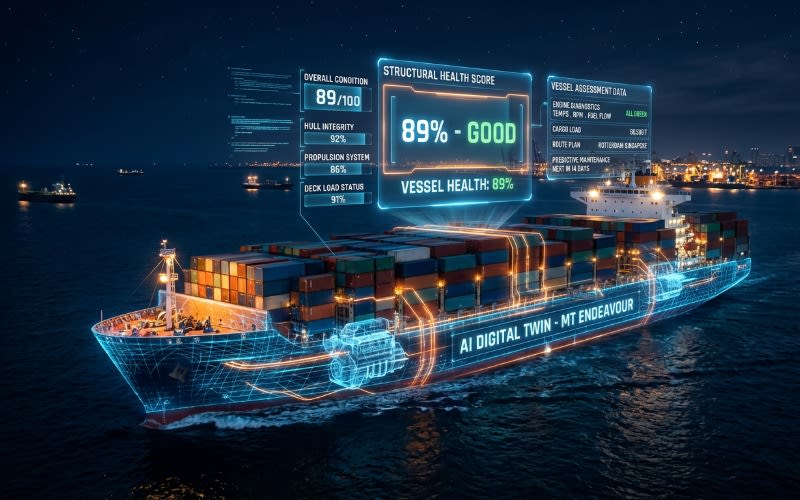
Computer vision matured. The same technology that powers autonomous vehicles can now analyze vessel imagery at scale. Hull damage that took surveyors days to document can be detected, classified, and scored in minutes.
Structured data infrastructure emerged. The missing piece was never AI models — it was the infrastructure to move data from physical asset to financial decision. Inspection data needs to feed scoring engines, which feed valuation models, which feed pricing systems. Without this pipeline, AI models sit in isolation.
Regulatory pressure increased. Classification societies and flag states are tightening documentation requirements. Insurers face growing pressure to demonstrate that their underwriting decisions are based on current, verifiable data — not outdated survey reports.
The Infrastructure Layer
Digital transformation in marine insurance is not about replacing humans with algorithms. It is about building the data infrastructure that connects every step in the value chain: inspection to scoring to valuation to pricing to claims.
When this infrastructure exists, human expertise becomes more valuable, not less. Underwriters can focus on judgment calls instead of data assembly. Surveyors can focus on complex cases instead of routine inspections. Brokers can differentiate on service quality instead of data availability.
The question is no longer whether marine insurance will digitize. It is which organizations will build the infrastructure first — and capture the competitive advantage that comes with better data, faster decisions, and more accurate pricing.